
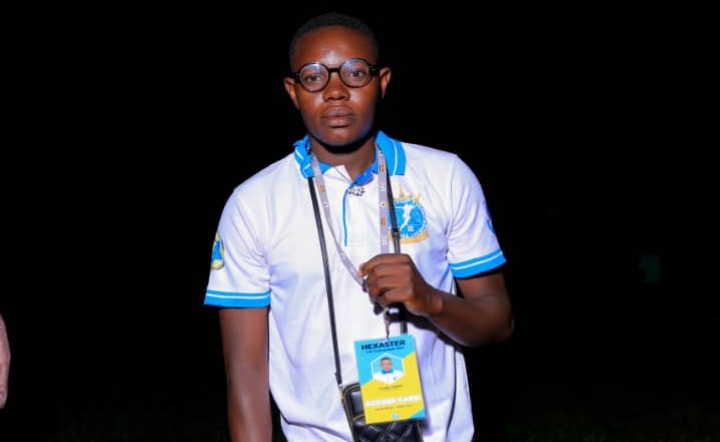
The Man Who Pushed Hexaster Cup Into Reality
A Conversation with Asaba Simon Grassroots football projects rarely begin on the pitch. Many of them start as ideas - dreams discussed in quiet conversations long before the first ball is kicked.
For the Hexaster Cup Tournament, now steadily growing into one of the most recognized grassroots competitions in Buruli County, the story began years before its first edition.
The brain behind the tournament, Aliganyira Yassin Hut Varlow, had already begun thinking, planning, and strategizing for the Hexaster Cup as early as 2020.
The vision was clear: to create a grassroots football platform capable of nurturing local talent and strengthening community identity through sport.
The tournament was initially expected to launch in 2021.
However, due to career commitments and other engagements, the project stalled before it could reach the field
But every vision needs a moment and often a person who pushes it from paper to reality.
That person was Asaba Simon, today the General Secretary of the Hexaster Cup Tournament. A childhood friend to Varlow,
Simon had known about the Hexaster idea from its earliest discussions. 2023, during one of their regular phone conversations,
Simon asked a simple but powerful question:
"Varlow, what do you really think about Hexaster? Do you mean your profession will not allow you to have Hexaster anymore?"
That question reignited the vision that had been lying dormant. From that moment, both men shifted their focus back to the dream. Within the same year, the Hexaster Cup Tournament was inaugurated for the first time, marking the beginning of what has now grown into a major grassroots football project.
In this interview, Asaba Simon reflects on the origins of the Hexaster Cup, the moment the idea was revived, and the journey of building the tournament from nothing.
Interview:
Asaba Simon
1. Simon, when did you first hear about the Hexaster Cup idea?
Simon:
I heard about Hexaster long before many people knew it existed. Varlow and I have been childhood friends, and we always shared our dreams and plans. Around 2020, he started talking seriously about creating a football tournament that could unite teams in our area and give young players a platform. At that time it was just an idea, but I could see how passionate he was about it.
2. What was your first reaction when he told you about the project?
Simon:
Honestly, I believed in it immediately. Grassroots football has always needed such initiatives. Many talented players remain unknown simply because there are not enough organized competitions. When Varlow explained the Hexaster concept, I felt it was something our community truly needed.
3. The project delayed between 2021 and 2022. What was happening during that time? Simon:
Life and career responsibilities caught up with us. Varlow had professional engagements that required a lot of attention, and organizing a football tournament is not something you do halfway. It requires full commitment. So the idea stayed alive in discussions but wasn't moving forward practically.
4. Tell us about the famous phone call in 2023 that changed everything.
Simon:
Yes, that call is very important in our story. We were having one of our usual conversations and I asked him directly:
Do you mean Hexaster is finished? Will your profession stop it from happening I wasn’t accusing him I just wanted to understand if the dream was still alive. That question sparked something in him again.
5. Did you expect that question to revive the project?
Simon:
Not really. I just wanted clarity. But when he responded, I could hear the determination returning. From that conversation onward, our discussions completely shifted toward making Hexaster a reality. We stopped talking about the idea and started planning the execution.
6. What were the first practical steps you both took after that conversation?
Simon:
We started organizing structures. We discussed tournament regulations, team involvement, logistics, and the management structure. The goal was to ensure that when Hexaster launched, it would already have clear rules and professional organization.
7. Looking back, how difficult was it to organize the first edition in the same year?
Simon:
It was very challenging. Starting a tournament from nothing requires convincing teams, mobilizing communities, and creating credibility. But the passion we had made it possible. Many people believed in the idea once they saw our seriousness.
8. What role do you personally play as General Secretary?
Simon:
My role mainly focuses on administration, coordination, and documentation. I ensure that communication between teams, officials, and organizers runs smoothly. In football organization, strong administration is very important because it keeps everything structured.
9. Now that the tournament is heading into its third edition, what does that mean to you?
Simon:
It means the vision is alive. The fact that the tournament has continued and is growing shows that the community supports it. For me personally, it is very fulfilling to see something that began as a conversation becoming a respected competition.
Finally, what message would you give to young people with ideas like Hexaster?
Simon:
Dreams are important, but action is what makes them real. Sometimes all someone needs is a small push or reminder. Hexaster is proof that ideas discussed between friends can grow into something meaningful for an entire community.

5 likes



Comments (2)
I really love that tournament and appreciate for your intention of bringing up the home boys on the map💙💙
Try to give gift 🎁 in time